
The best discounts this week
Every week you can find the best discounts here.

Safe End Preparation Burs Kit

Blue Rotary File 21mm: High-Flexibility Endodontic Solutions

Blue Files 21mm Assorted (Pack of 6)

Rhodium-Coated Anti-Fog Mouth Mirror (Pack of 10)
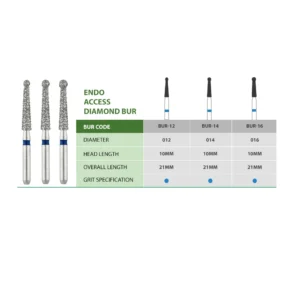
Endo Access Bur pack of 1
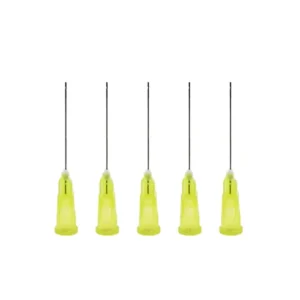
Disposable Irrigation Needles – Pack of 25
Dentistkart.in › Clinical Guides
Clinical Guide
8 min read · Updated 2025
K-File, H-File, and Flex-File: Differences Every Dentist Should Know
You have three file types on your tray. Do you know which one to reach for — and when? Here is the definitive clinical breakdown.
Who this is for: General dentists and BDS graduates performing root canal treatments who want to choose the right hand file with confidence. This guide covers manufacturing, cross-section geometry, motion, and the exact clinical situations where each file type wins.
Walk into any dental supply store — or browse Dentistkart — and you will find K-files, H-files, and flex-files stocked side by side. They look similar. They are all stainless steel hand files used in root canal preparation. And yet, using the wrong one in the wrong situation can mean a separated instrument, a ledge, or a perforated canal.
The difference between these three files is not just a brand name or a colour coding. It comes down to how they are manufactured, what their cross-sectional geometry does to dentine, and what motion they are designed for. Once you understand those fundamentals, the clinical decision becomes obvious.
A Quick Look at All Three — Side by Side
Before diving into each file individually, here is a comparison of the key parameters that matter in clinical practice:
| Parameter | K-File | H-File (Hedstrom) | Flex-File (K-Flex) |
|---|---|---|---|
| Manufacturing method | Twisted from a square/triangular blank | Ground (machined) from a round blank | Twisted from a rhomboid blank |
| Cross-section shape | Square or triangular | S-shaped (double helix) | Rhomboid (diamond-like) |
| Primary motion | Watch-winding + filing | Pull-stroke only | Watch-winding + filing |
| Cutting efficiency | Moderate | Excellent (on pullback) | High |
| Flexibility | Moderate | Low (prone to fracture on rotation) | High (better than K-file) |
| Safe in curved canals? | With care (smaller sizes) | No — avoid rotation | Yes — designed for curves |
| Debris removal | Moderate (chips pack apically) | Excellent (flutes carry debris out) | Good |
| Risk of separation on push | Moderate if overused | Very high | Low |
| Best suited for | Initial negotiation, straight canals | Pulp tissue removal, post removal | Curved/calcified canals |
| Standard ISO sizes | 6–140 | 15–140 | 15–60 |
K-File: The Workhorse of Root Canal Preparation
Kerr File
- Twisted from square or triangular blank
- 8–16 flutes per mm
- Handle colour: ISO standardised
- Use: Watch-winding + gentle filing
- Range: ISO 06 to 140
- Both stainless steel and NiTi variants available
The K-file (also called the Kerr file) is the oldest and most widely used hand endodontic file. It is manufactured by twisting a square or triangular tapered blank, which creates sharp flutes that spiral around the shank. The tighter the twist, the more flutes per millimetre — which affects both cutting efficiency and stiffness.
How to use it correctly
The K-file is designed for a watch-winding motion (30–60 degrees clockwise and counter-clockwise) combined with a light apical push-and-pull. This is different from a full rotation, which is reserved for rotary NiTi systems. Excessive rotational force with a K-file — especially in curved canals — significantly increases the risk of separation.
In very narrow or calcified canals, K-files are available in the ultra-small sizes (ISO 06, 08, 10) that no other file type offers, making them irreplaceable for initial glide path negotiation.
Clinical tip: Always pre-curve small K-files (sizes 10–15) before inserting them into a curved canal. Use a sterile cotton pledget or your gloved fingernail to introduce a smooth curve matching the radiographic curvature. This alone prevents ledge formation in the majority of cases.
When K-file is the right choice
- Initial canal exploration and glide path
- Straight or gently curved canals
- Canal is very narrow (ISO 06–15)
- You need tactile feedback on canal anatomy
- Working length confirmation with apex locator
- Recapitulation between rotary file sequences
H-File (Hedstrom File): The Cutting Specialist
Hedstrom File
- Ground (not twisted) from a round blank
- S-shaped cross-section, sharp cutting edges
- Motion: Pull-stroke ONLY
- Highest cutting efficiency of all hand files
- Range: ISO 15 to 140
- Not suitable for rotation — fracture risk is high
The Hedstrom file (H-file) is manufactured differently from K-files. Instead of twisting a blank, it is ground (machined) from a round stainless steel blank. This produces an S-shaped or spirally-fluted cross-section with extremely sharp cutting edges — each flute acts like a tiny scraper along the canal wall.
The result is the highest cutting efficiency of any hand file on a pull-stroke. But here lies the critical catch: the H-file’s ground cross-section makes it inherently brittle under torsional stress. Rotating an H-file — even slightly — in a curved canal can cause abrupt fracture without warning. Unlike K-files, which show visible distortion before fracturing, H-files often fail suddenly.
Critical rule: Never rotate an H-file inside a curved canal. Use it exclusively with a pull-stroke after the canal has been shaped with K-files. Rotation, even a quarter turn, dramatically increases separation risk. This rule is non-negotiable.
Where H-files genuinely outperform everything else
Despite the rotation restriction, there are clinical situations where the H-file is not just acceptable — it is the best tool for the job.
- Removing pulp tissue rapidly from a wide, straight canal
- Retreatment — stripping out old gutta-percha
- Removing a fractured post (with special technique)
- Widening the canal after initial shaping is done
- Smooth, straight canals (upper anteriors, premolars)
- You want debris carried coronally, not packed apically
In retreatment cases especially, the H-file’s aggressive pull-cut action on old gutta-percha is significantly faster than any other hand instrument. Many experienced endodontists use H-files as a first step after softening the old fill with a solvent, pulling out long threads of material efficiently.
Flex-File (K-Flex File): The Curved Canal Specialist
K-Flex / Flex-File
- Twisted from a rhomboid (diamond) blank
- Alternating cutting and non-cutting edges
- Motion: Watch-winding + filing (like K-file)
- Significantly more flexible than standard K-file
- Range: ISO 15 to 60
- Better debris removal than K-file
The Flex-file (commercially available as the K-Flex file) is a modification of the K-file, designed to address its main limitation: stiffness in curved canals. It is manufactured by twisting a rhomboid (diamond-shaped) blank instead of the square blank used for standard K-files. This seemingly small change in geometry has a significant clinical impact.
Because the rhomboid blank removes material from the two broader faces of the shank, the resulting file is markedly more flexible. At the same time, alternating sharp and blunt cutting edges improve chip clearance and reduce the tendency of debris to pack apically.
Why flexibility matters more than you think
In a curved canal, a stiff file tends to straighten the canal — creating a zip or elbow deformity — rather than following the natural anatomy. The Flex-file’s superior flexibility allows it to hug the curve, maintain the natural path, and reduce transportation of the apical foramen. This is particularly important in molars with severe curvatures where standard K-files tend to create ledges.
Clinical tip: In mandibular molars with mesial canals that curve sharply in the apical third, start your glide path with ISO 10 and 15 Flex-files before picking up your NiTi rotary system. The added flexibility preserves canal anatomy at the critical apical constriction.
- Severely curved canals (molars, lower premolars)
- Apical curvature visible on pre-op radiograph
- Calcified canals with unpredictable path
- Glide path establishment before NiTi rotary
- Canal with S-curve or double curvature
- Replacing stiff K-files when ledging is a concern
The One-Minute Decision Guide for the Clinic
You have picked up a file. Before it enters the canal, here is the three-question check:
| Situation | Recommended file | Reason |
|---|---|---|
| Canal is narrow and you cannot find the working length | K-file (size 06–10) | Only K-files available in sub-15 ISO sizes |
| Wide, straight canal — need to remove bulk pulp tissue fast | H-file (size 25–40) | Fastest cutting on pull-stroke; great for straight anatomy |
| Curved molar canal, pre-NiTi glide path | Flex-file (size 10–20) | Superior flexibility preserves canal anatomy at curves |
| Retreatment — removing old gutta-percha | H-file (size 30–40) | Aggressive pull-cut strips fill material efficiently |
| Recapitulation between rotary file sequences | K-file (size 10–15) | Maintains patency; tactile feedback confirms no blockage |
| Severely calcified, unpredictable canal path | Flex-file (size 10–15) + chelating agent | Flexibility + EDTA gel combination is gold standard |
| Upper central incisor — wide, single, straight | H-file or K-file | Both work well here; H-file finishes faster |
| Lower first molar mesial canal with apical curve | Flex-file to glide path, then NiTi | Highest transportation risk if stiff file is forced |
The Three Most Common File Selection Mistakes
1. Using an H-file in a curved canal with rotational motion
This is the single most common cause of H-file separation. The ground cross-section cannot tolerate rotation. If your canal has any appreciable curve visible on the pre-op X-ray, keep the H-file out — or use it only in the straight coronal portion with a strict pull-stroke.
2. Using a standard K-file to navigate a severely curved canal when Flex-files are available
Many dentists default to K-files because they are what they were taught with. But in a molar with a 25–30 degree apical curvature, a standard K-file will straighten the canal over multiple passes. Switching to a Flex-file at this point — even just for the glide path — preserves anatomy that cannot be restored once it is lost.
3. Skipping recapitulation with K-files between NiTi sequences
This is not about the K-file being superior to NiTi — it is about maintaining apical patency. A small (ISO 10 or 15) K-file passed to working length between NiTi sequences confirms the canal remains patent and prevents apical packing of debris, which is a leading cause of post-treatment pain.
How Many Uses Before You Discard?
Stainless steel hand files are reusable — but there are limits. The standard clinical guidance is:
| File type | Recommended uses before discard | Key indicator to discard early |
|---|---|---|
| K-file (sizes 06–20) | 5–8 uses (single patient; discard after one calcified case) | Any visible unwinding, kinking, or tip deformation |
| K-file (sizes 25 and above) | Up to 10 uses in uncomplicated canals | Visible wear on flutes; loss of sharp feel on rotation |
| H-file | 3–5 uses (more conservative due to fracture risk) | Any dull feel on pull-stroke; or if used in a tight canal |
| Flex-file | 5–8 uses | Any visible distortion of the rhomboid cross-section |
Important: In India, file reuse is common for cost reasons. However, always inspect files under magnification before reuse. A file that shows any unwinding, bright spots from metal fatigue, or reduced flexibility should be discarded immediately — the cost of managing a separated instrument vastly exceeds the cost of a new file.
Summary: The Simple Version
If you remember only three things from this guide, make it these:
- Start every root canal here
- Use for glide path and patency
- Watch-winding motion
- Available in the smallest sizes
- Use after initial shaping is done
- Pull-stroke only — never rotate
- Best for removing tissue fast
- Excellent for retreatment
- Upgrade from K-file for curved canals
- Preserves canal anatomy better
- Essential for molar glide paths
- Works with same motion as K-file
Stock all three file types from one trusted source
Dentistkart.in carries K-files, Hedstrom files, and Flex-files from verified manufacturers — with bulk pricing for clinics and dental colleges across India.
Clinical content reviewed by practising dentists. Written to help Indian dental professionals make confident instrument choices.
Recent Posts
- Dental Colleges In India – Dentistkart
- Dentistkart vs local dental supplier — why buying endo products online saves money
- Best WhatsApp groups and communities for endodontists in India
- Gutta Percha Points Buying Guide: Sizes, Tapers, and Brands Explained
- K-File, H-File, and Flex-File: Differences Every Dentist Should Know