
The best discounts this week
Every week you can find the best discounts here.

Safe End Preparation Burs Kit

Blue Rotary File 21mm: High-Flexibility Endodontic Solutions

Blue Files 21mm Assorted (Pack of 6)

Rhodium-Coated Anti-Fog Mouth Mirror (Pack of 10)
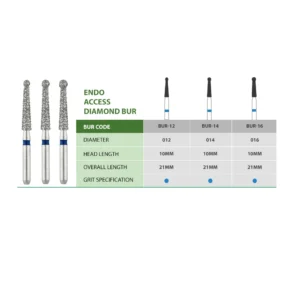
Endo Access Bur pack of 1
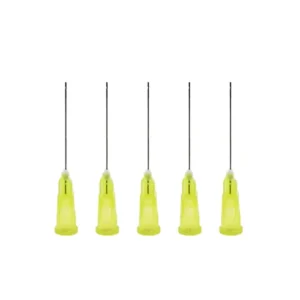
Disposable Irrigation Needles – Pack of 25
Gutta Percha Points Buying Guide: Sizes, Tapers, and Brands Explained
Dentistkart.in › Clinical Guides › Endodontics
Gutta Percha Points Buying Guide: Sizes, Tapers, and Brands Explained
Everything Indian dentists need to know before buying gutta percha — ISO coding decoded, taper selection simplified, and the honest brand comparison no catalogue will give you.
 Gutta percha points are available in .02, .04, and .06 tapers — each taper range colour-coded by ISO size for easy selection in the clinic
Who this is for: General dentists and dental practice owners who want to stock gutta percha intelligently — not just order whatever arrives in the next catalogue. This guide explains the complete selection logic so you always have the right cone on your tray.
Gutta percha is one of those materials every dentist buys regularly, yet very few think critically about before ordering. It comes in small boxes, costs less than most endo consumables, and seems straightforward — until you are mid-procedure and the cone you assumed would fit the canal does not give you the tug-back you need.
The wrong gutta percha choice does not always cause a visible failure on the immediate post-op radiograph. The consequences show up months later — micro-leakage, reinfection, and a retreatment conversation you did not want to have. This guide is designed to prevent exactly that.
What Is Gutta Percha and Why Is It Still the Standard?
Gutta percha is a purified, coagulated latex obtained from Palaquium trees native to Southeast Asia. In its dental form, it is a compound of approximately 20% gutta percha polymer, 65–70% zinc oxide, and small amounts of heavy metal sulphates (for radiopacity) and wax/resins (for plasticity). The result is a material that is biocompatible, dimensionally stable at room temperature, radiopaque on X-ray, and thermoplastic when heated — making it suitable for both cold and warm obturation techniques.
Alternatives to gutta percha (Resilon, bioceramic cones, thermoplastic systems) exist and have grown in popularity, but gutta percha with a zinc oxide eugenol or bioceramic sealer remains the most clinically validated obturation combination worldwide and the most widely used in Indian clinics.
 A correctly seated master cone gives tug-back resistance when the cone is pulled back approximately 1 mm — this is the primary clinical confirmation before obturation proceeds
ISO Colour Coding — The System Every Dentist Must Know Cold
The ISO system assigns each gutta percha size a specific colour. This matches the colour coding used on endodontic files, meaning your master cone selection after preparing to an ISO 30 master apical file should be a size 30 gutta percha — same colour, same number.
Key insight: The colour coding repeats every 5 sizes (white → yellow → red → blue → green → black). This is why ISO size 15 and 45 are both white, 20 and 50 are both yellow, and so on. When buying, always confirm the size number printed on the vial — not just the colour.
Taper Explained: .02, .04, .06 — What These Numbers Actually Mean
The taper of a gutta percha point describes how much wider the cone gets per millimetre of length, moving from the tip toward the handle. A .02 taper means the cone increases by 0.02 mm in diameter for every 1 mm of length. A .06 taper increases by 0.06 mm per millimetre — three times faster.
Why does this matter in practice? Because your gutta percha taper must match the taper of the file system you used to prepare the canal. A canal shaped with .04 taper rotary files needs a .04 taper master cone — not a .02 cone, which will sit too loosely in the coronal third and create voids.
| Taper | Canal preparation match | Clinical use | Technique compatibility |
|---|---|---|---|
| .02 (Standardised) | K-file hand preparation (ISO standard) | Traditional hand-preparation cases; narrow canals in anterior teeth | Lateral condensation, single cone in small canals |
| .04 (Greater taper) | Most NiTi rotary systems (ProTaper, Mtwo, OneShape, etc.) | Most molar and premolar cases with rotary preparation; the most commonly stocked taper in India | Single cone with sealer, lateral condensation, warm vertical |
| .06 (Greater taper) | Larger crown-down rotary shapes; gates glidden + rotary sequences | Wide molar canals, upper anteriors with wide anatomy, retreatment cases | Single cone with bioceramic sealer; warm obturation systems |
| System-matched (ProTaper F1/F2/F3, WaveOne Small/Primary) | Specific NiTi systems only — not interchangeable | Single-cone obturation after ProTaper, WaveOne, Reciproc preparation | Single cone only — taper is variable by design, not ISO-standard |
Common mistake: Using a .02 taper cone after preparing with .04 taper files. The cone fits at the apex but leaves a large unfilled space in the body of the canal. This is a leading cause of coronal leakage even when the apical seal looks acceptable on X-ray. Always match taper to your file system.
System-Matched Cones: ProTaper, WaveOne, and Reciproc Explained
When you use a rotary file system like ProTaper or WaveOne, the canal shape is no longer a simple single taper — it is variable. ProTaper files produce a canal that is wider at different cross-sections than a simple .04 or .06 taper would suggest. For this reason, each major file manufacturer produces proprietary gutta percha cones that are physically shaped to match their instruments.
| File system | Matching GP cone | Tip diameter | Can you substitute? |
|---|---|---|---|
| ProTaper F1 | ProTaper F1 GP (yellow) | D0 = 0.20 mm | ISO 20 / .06 works, but fit is approximate — tug-back unreliable |
| ProTaper F2 | ProTaper F2 GP (red) | D0 = 0.25 mm | ISO 25 / .08 is closest — acceptable in budget settings |
| ProTaper F3 | ProTaper F3 GP (blue) | D0 = 0.30 mm | ISO 30 / .09 — workable but not ideal for single-cone technique |
| WaveOne Gold Primary | WaveOne Gold Primary GP (red) | D0 = 0.25 mm | Not recommended for single cone — use matched cone only |
| Reciproc Blue R25 | Reciproc R25 GP | D0 = 0.25 mm | Only for lateral condensation as primary cone — not single cone |
| OneShape / MTwo 25/.06 | .06 taper size 25 GP | D0 = 0.25 mm | ISO .06 taper size 25 is a correct substitute |
Practical tip for Indian clinics: If budget is a constraint and you cannot always stock system-matched cones, use greater taper ISO cones (.04 or .06) of the matching tip size, but switch to lateral condensation technique instead of single-cone. Single-cone obturation is only reliable with exactly matched cones. Lateral condensation with a close-fitting master cone and accessory points remains clinically sound.
Brand Comparison: What’s Worth Stocking in an Indian Clinic?
The Indian market has seen an explosion of gutta percha brands in the last decade — from global premium names to competitively priced domestic and Chinese-origin options. Here is an honest breakdown:
Premium
- ProTaper, WaveOne Gold, Conform Fit ranges
- ISO-verified, consistent tip diameter
- Conform Fit cones: tighter tolerance (±0.03 mm vs ±0.05 mm standard)
- Expensive — most used in specialist clinics
- Best for single-cone obturation with their file systems
Value
- Korean manufacturer — strong quality-to-price ratio
- Wide ISO range (.02/.04/.06) all available
- Flexible, radiopaque, depth-marked
- Popular among general dentists in India
- Good for lateral condensation and warm obturation
Value
- ISO-compliant, cadmium-free, latex-free
- Hand-rolled — consistent tip geometry
- Available in depth-marked versions
- Competitive pricing for bulk clinic orders
- Suitable for both hand and rotary prep cases
What Should Your Clinic Actually Stock?
The biggest mistake when buying gutta percha is stocking only one box of assorted points and hoping it covers all cases. A well-organised endo tray needs at minimum three distinct SKUs. Here is the recommended stocking logic:
- .02 taper sizes 15–40 (assorted)
- .04 taper sizes 20–40 (assorted)
- ProTaper F1/F2/F3 or equivalent
- Accessory / fine-fine points (for lateral condensation)
- .06 taper sizes 20–40 (for crown-down prep cases)
- WaveOne or Reciproc matched cones (if you use these systems)
- Sizes 45–60 in .02 taper (for wide anterior canals)
- Thermoplastic GP pellets (if you use Obtura/BeeFill)
- Bioceramic-coated GP cones (for bioceramics sealer users)
- Paper points (matching sizes to your GP stocking)
- Bulk packs for ProTaper F2 and F3 (highest use sizes)
- Retreatment GP for dissolving in solvent
What NOT to do: Do not substitute system-matched cones with non-matching ones for single-cone technique and then wonder why your post-op film shows voids. And do not use gutta percha that has been stored in sunlight or heat — UV and heat cause hardening and brittleness in the polymer, making the cone snap inside the canal during warm obturation.
How to Check Gutta Percha Quality Before Using It
When a new batch of gutta percha arrives in your clinic — whether from a new supplier or a familiar brand — these three checks take under two minutes and can prevent intraoperative problems.
| Check | How to perform it | What good looks like | Reject if |
|---|---|---|---|
| Tip diameter calibration | Place the size 25 or 30 cone in an endodontic gauge at the D0 mark | Cone seats snugly in the corresponding gauge hole | Cone passes through freely (undersized) or won’t enter (oversized) |
| Flexibility test | Bend the cone between your fingers — it should flex easily without snapping | Smooth, elastic bend; springs back partially | Snaps or crumbles — indicates degraded, hardened, or expired stock |
| Surface condition | Visual inspection under operatory light | Smooth, slightly glossy, uniform surface with no visible pores | Crystalline surface (white powder), surface cracks, or sticky texture |
| Radiopacity check | Place one cone on an X-ray sensor alongside a reference file | Clearly visible, denser than dentine | Faint or invisible on radiograph — zinc oxide content may be inadequate |
A Word on Accessory Points — The Most Under-Ordered Item in Endo
Dentists who perform lateral condensation regularly know the frustration of having master cones stocked well but running out of accessory points mid-case. Accessory (auxiliary) gutta percha points are thinner, more tapered points used to fill the spaces between master cones after spreading.
They are designated as Fine-Fine (FF), Fine (F), Medium-Fine (MF), and Medium (M) — not by ISO number. The most commonly used in lateral condensation are Fine and Fine-Fine. As a rule of thumb, stock accessory points at a 2:1 ratio compared to master cone boxes if lateral condensation is your primary obturation technique.
Tip for ordering: For a clinic doing 10–15 root canal cases per month with lateral condensation, one box of 120 master cones (assorted .04 taper) and two boxes of Fine-Fine accessory points per month is a reasonable baseline. Adjust based on your proportion of molar versus anterior cases.
Storage and Shelf Life — Often Ignored, Often the Problem
Gutta percha has a shelf life of typically 2–3 years from manufacturing date, but incorrect storage can degrade it significantly faster. The key enemies are UV light, heat above 35°C, and humidity.
Correct storage checklist for your clinic
- Store in original opaque vials or dark containers
- Keep away from direct sunlight and operatory lights
- Room temperature storage (15–25°C) is ideal
- Do not store in autoclave room (heat + humidity)
- Check expiry dates on all incoming stock
- Rotate stock — use older boxes before newer ones
- Keep unused points in sealed vials
- Never store opened vials near chemical disinfectants
Quick-Decision Summary: Which Gutta Percha to Order
| Your situation | Buy this |
|---|---|
| General practice, hand preparation with K-files | .02 taper assorted sizes 15–40; Fine-Fine accessory points |
| General practice, ProTaper rotary system | ProTaper F1/F2/F3 matched cones; .04 taper as backup |
| General practice, WaveOne Gold | WaveOne Gold matched cones (Small, Primary, Large) |
| High-volume molar cases with NiTi rotary | .04 taper assorted bulk (120-pack) in sizes 20–35; ProTaper F2/F3 |
| Single-cone technique user | System-matched cones only — do not substitute with generic |
| Mixed practice, want one versatile option | .04 taper sizes 20–40 assorted from Meta Biomed or DiaDent |
| Dental college bulk procurement | .02 taper full ISO range 15–80 + .04 taper 20–40; budget Indian brands acceptable |
| Retreatment cases | .02 or .04 taper standard GP — used with chloroform/eucalyptol to dissolve old fill |
Order gutta percha points in bulk from dentistkart.in
All major brands stocked — Dentsply ProTaper, Meta Biomed, DiaDent, Roeko, and domestic options. Fast delivery across India. Verified authentic products.